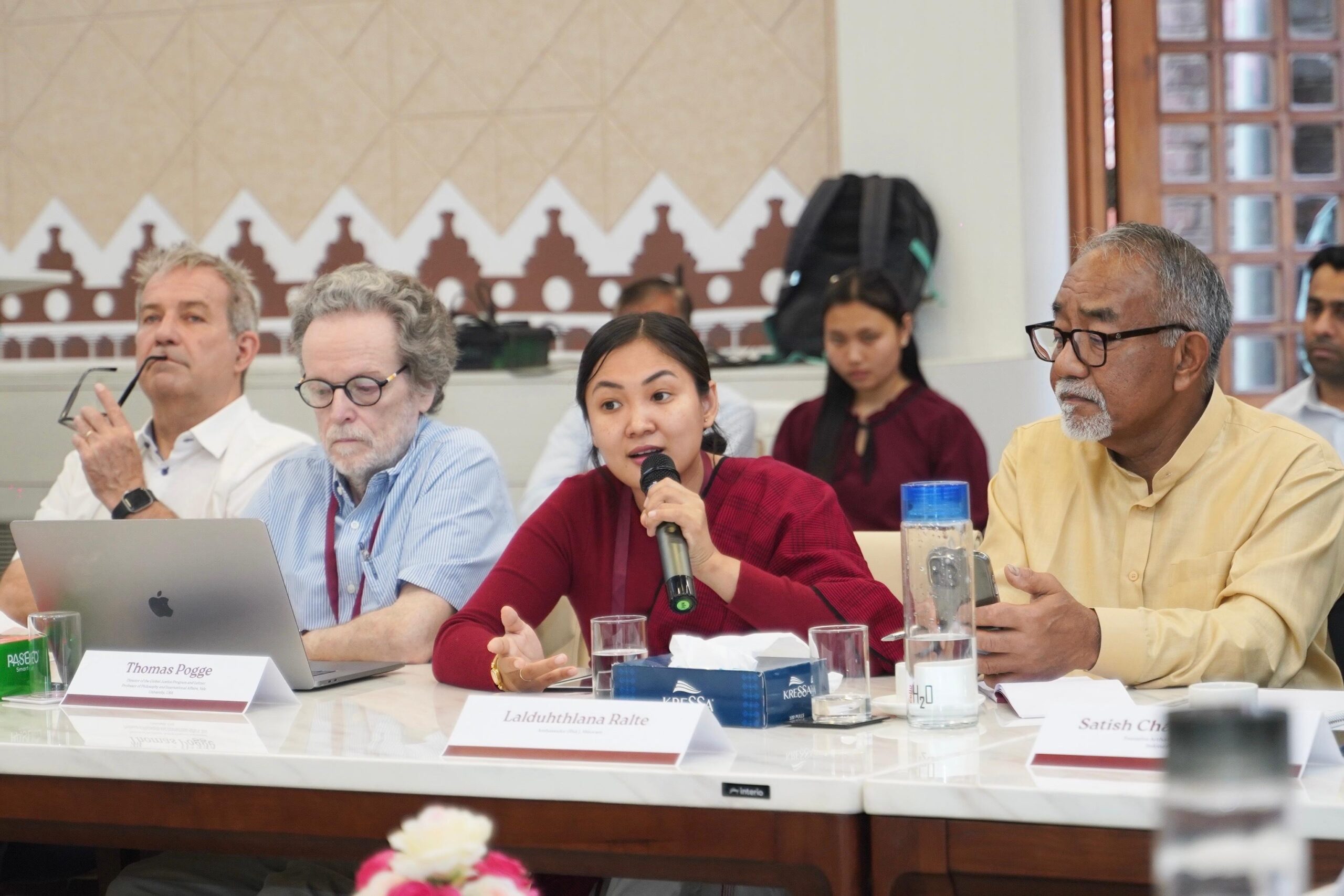
Dr. Chubaienla Imchen, Assistant Professor, Department of Economics, Jubilee Memorial College, Mokokchung, participated in the inaugural Nalanda Development Dialogue held at Nalanda University from 8-9 March 2026.The Dialogue was organized under the theme “Foundations for the Future of Common Development Goals: Bridging Foresight, Building Pathways, Reviving Track-2 Diplomacy.” The event brought together scholars, policymakers, and development experts from seven countries — Japan, Germany, Brazil, Nepal, China, Indonesia, and the United States along with participants from India to deliberate on emerging global development challenges and cooperation beyond the 2030 Sustainable Development Goals agenda.Dr. Imchen participated as one of the speakers in the session titled “North East India Highlight – Conservation, Connectivity: Localization of SDGs as a Long-Term Development Strategy.” During the session, she highlighted Nagaland’s development context, emphasizing the importance of ecological sustainability, community-based governance, and inclusive livelihood strategies.She discussed the challenges faced by the state, particularly limited economic diversification and high unemployment among educated youth. At the same time, she emphasized the potential of sectors such as organic agriculture, agroforestry, eco-tourism, and high-niche rural enterprises in promoting sustainable rural development.Dr. Imchen also highlighted Nagaland’s strategic geographical location, noting that the state shares an international border with Myanmar placing the region in a crucial position within India’s Act East Policy and regional connectivity initiatives.The session was moderated by Prof. Jayanta Chaudhury, Professor and Head of the Department of Rural Development and Planning, Nagaland University. Other notable speakers in the session included Prof. Rajiv Gandhi, Professor at Tezpur University; Prof. Prasenjit Biswas, Professor at North-Eastern Hill University; Prof. Prakash Raut, Professor at Sikkim Central University; Dr. Kangujam Lokendra, Professor and Head at the National Institute of Rural Development and Panchayati Raj (NIRDPR), Hyderabad; Prof. Jyotiraj Pathak from Cotton University; Ambassador Lalduhthlana Ralte, former Ambassador from Mizoram; and Manoshi Das, Anthropologist from the NETRA Foundation.The Dialogue featured several plenary roundtables, keynote discussions, and moderated dialogues addressing key global issues such as reframing development toward the post-2030 agenda, macroeconomic cooperation, climate change, sustainable development pathways and regional economic transformation.Prominent international speakers included Prof. Deepak Nayyar, Emeritus Professor of Economics at Jawaharlal Nehru University; Prof. Theumas Pogge, Director of the Global Justice Program at Yale University; Prof. Tetusshi Sonobe, Professor at the National Graduate Institute for Policy Studies (GRIPS), Tokyo; Christian Kastrop, CEO of the Global Solutions Initiative, Berlin; Andre de Mello e Souza, Head of the International Policy Centre for Inclusive Development (IPC-IG), Brazil; Stephan Klingebiel, Chair of the Research Programme on International and Transnational Cooperation at the German Institute of Development and Sustainability (IDOS); and Bambang Brodjonegoro, Dean and CEO of the Asian Development Institute (ADBI), Tokyo.The programme also included interactive dialogues, policy discussions, and international roundtables, enabling participants to exchange perspectives on global cooperation, development governance, and future development frameworks.
Dr. Chubaienla Imchen, Assistant Professor, Department of Economics,participated in the inaugural Nalanda Development Dialogue held at Nalanda University from 8-9 March 2026.
Dr. Chubaienla Imchen, Assistant Professor, Department of Economics,participated in the inaugural Nalanda Development Dialogue held at Nalanda University from 8-9 March 2026.